 Bellingham
 Sudden Valley's Siding Has a Harder Job Than Most
Sudden Valley sits on the south shore of Lake Whatcom, wrapped in fir and cedar tree cover that most Bellingham neighborhoods don't have. That's part of what makes the community desirable, but it also creates a specific set of conditions for exterior siding: heavy shade that keeps walls damp longer after every rain, tree debris that collects in wall cavities and gutters, and a lake-and-forest microclimate that runs wetter and cooler than more open parts of Whatcom County. Add in the salt-laden air that drifts inland off Bellingham Bay and the driving, wind-pushed rain that comes through in fall and winter storms, and you've got a combination that punishes the wrong siding material fast.
This page is about one thing: installing James Hardie fiber cement siding correctly on Sudden Valley homes. Not a general siding overview, not a sales pitch for every product on the market — just what this specific neighborhood's climate demands, what a correct installation actually involves, and why it matters that the crew doing the work already understands these conditions.
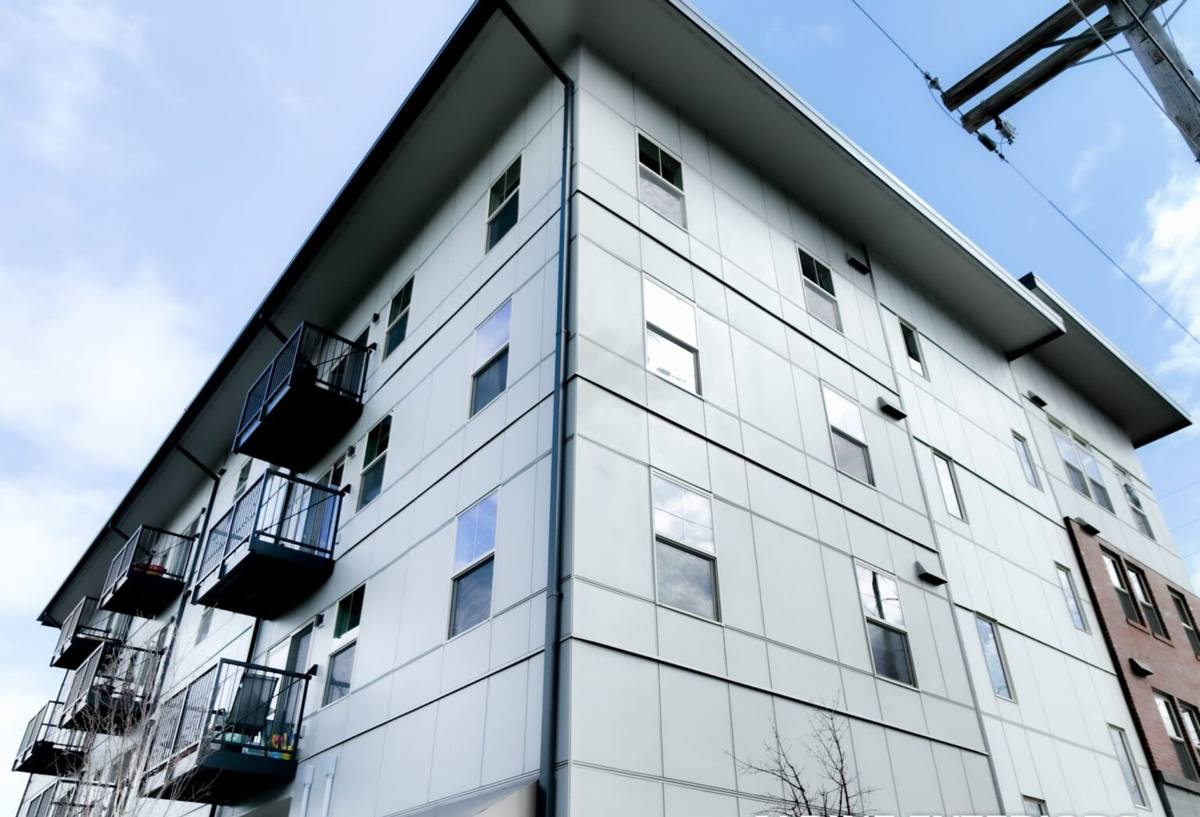
The Climate Factors That Actually Matter Here
Salt Air Off Bellingham Bay
Whatcom County's marine air carries fine salt particulate that settles on exterior surfaces and slowly attacks fasteners, caulking, and painted finishes. It's a slower process than the direct salt exposure you'd see right on the water, but Sudden Valley still gets enough of it that untreated or poorly finished siding shows premature fading, chalking, and corrosion at the fastener heads over the years.
Driving, Wind-Pushed Rain
Bellingham's storms rarely fall straight down. Wind pushes rain sideways into wall assemblies, which means the water-resistive barrier, flashing details, and siding overlaps behind the finish material matter as much as the finish material itself. A siding product can be excellent and still fail early if it's installed without accounting for wind-driven moisture intrusion.
The Long Moss Season
Shaded, tree-covered lots like the ones common throughout Sudden Valley stay damp for months at a stretch. That's exactly the environment moss and algae need to take hold on siding, trim, and roof lines. Porous or absorptive siding materials give moss something to grip and feed on; siding that can't shed water quickly stays wet longer between rain events, extending the window moss has to establish itself each year.
Why Fiber Cement Holds Up Better in This Environment
We install James Hardie fiber cement exclusively, and Sudden Valley's climate is a good illustration of why. Fiber cement is dimensionally stable, doesn't absorb moisture the way wood-based products do, and carries a factory-applied finish engineered to resist fading and biological growth. Here's how that stacks up against the materials we see replaced most often in this area:
| Material | Moisture behavior | Moss/algae resistance | Typical upkeep in this climate |
|---|---|---|---|
| Vinyl siding | Doesn't absorb water, but expands/contracts and can warp or crack in temperature swings and impacts | Low — smooth surface helps some, but seams and laps trap organic debris | Panel replacement after impact damage; seams open over time |
| Cedar/wood siding | Absorbs moisture readily; swells, cups, and rots without diligent maintenance | Poor — organic material is a food source for moss and fungus | Recurring repainting/staining, caulking, and rot repair |
| Engineered wood (e.g. LP SmartSide) | Wood-based core is moisture-sensitive at cut edges and panel joints if not sealed and maintained per spec | Moderate — better than solid wood but still an engineered wood product | Edge sealing and joint maintenance are non-negotiable |
| James Hardie fiber cement | Non-combustible, dimensionally stable, engineered for high-moisture climates (HZ5 zone) | High — ColorPlus factory finish resists fading and biological growth better than field-applied paint | Periodic washing; no repainting for years under warranty |
We don't install vinyl, cedar, LP SmartSide, Cemplank, Allura, or primed spruce. Each of those products has legitimate uses, but in a climate that combines shade, moisture, and salt air the way Sudden Valley does, we've seen enough of the maintenance burden and moisture-related failures to standardize on one product we can stand behind — James Hardie, installed to manufacturer spec, in the HZ5 line engineered for the Pacific Northwest.
What a Correct Fiber Cement Installation Involves
Moisture Management Behind the Siding
The siding itself is only part of the system. A correct installation starts with a properly lapped weather-resistive barrier, correctly integrated window and door flashing, and — on shaded, moisture-heavy lots like much of Sudden Valley — a rainscreen or furring strip system that creates an air gap behind the siding. That gap lets any moisture that does get behind the panels dry out instead of sitting against the sheathing, which matters more here than it would on a dry, sun-exposed lot.
Fastening and Clearances
James Hardie publishes specific fastener type, spacing, and penetration requirements, along with minimum clearances from grade, roof lines, and decks. Skipping these details doesn't show up as a problem in year one — it shows up as trapped moisture, fastener corrosion, or premature panel failure five or ten years down the road, which is exactly when it's expensive to fix.
Factory Finish, Not Field Paint
ColorPlus finish is baked on at the factory under controlled conditions, which gives it better fade and moss resistance than a job-site paint job. Field-painted cut edges still need to be sealed correctly during installation — a detail that's easy to rush and important not to.
- Weather-resistive barrier lapped correctly, shingle-style, with no reverse laps
- Rainscreen gap on shaded or high-moisture wall sections
- Manufacturer-specified fasteners at correct spacing and depth
- Proper clearance from grade, roofing, decks, and hardscape
- All cut edges sealed per Hardie's field application guidelines
- Flashing integrated at every window, door, and penetration
- Caulking only at specified joints — not as a substitute for correct flashing
Our Process for Sudden Valley Projects
We start with an on-site assessment of the existing siding and the specific conditions of the lot — tree cover, shade patterns, existing moisture damage, and how the home is currently venting and shedding water. From there we walk through James Hardie's product lines and ColorPlus color options and settle on the right combination for the home's exposure and the owner's preferences. Installation follows Hardie's published specifications for our climate zone, and we do a final walk-through before calling the job done, checking flashing, clearances, and finish work up close rather than from the ground.
Why the Crew Matters as Much as the Product
James Hardie is a strong product, but it's only as good as its installation. A crew that regularly works Sudden Valley and similar Whatcom County neighborhoods already knows to plan around narrow, wooded driveways and limited staging space, to account for shade and moisture patterns specific to tree-covered lots, and to build in the ventilation details that matter on a lake-adjacent, forested property. That familiarity shows up in fewer surprises during the job and a longer service life once it's done.
Questions Worth Asking Any Siding Contractor
- Are you installing to the manufacturer's published specifications for our climate zone, not just "how we usually do it"?
- Will you include a rainscreen or ventilation gap on shaded wall sections?
- What's your plan for flashing at windows, doors, and roof-to-wall transitions?
- What warranty applies to the material, and what applies to your labor?
- Have you worked on other homes in this specific neighborhood?
Living With Fiber Cement Siding in Sudden Valley
Once it's installed correctly, fiber cement is low-maintenance, not zero-maintenance. Periodic washing to keep organic buildup from accumulating on shaded elevations is worth doing, especially given how long the moss season runs here. Keeping gutters clear of the tree debris common on wooded lots protects the siding below from standing water and staining. Beyond that, ColorPlus finish is built to go years without repainting, which is a meaningful difference from wood siding that needs recoating on a recurring cycle.
Cost Factors to Understand
| Factor | Why it affects price |
|---|---|
| Existing siding removal and disposal | Tear-off complexity varies with layers, sheathing condition, and access |
| Sheathing and moisture repair | Rot or water damage found underneath the old siding needs to be addressed before new siding goes on |
| Rainscreen/furring system | Adds material and labor but pays off in longevity on shaded, damp lots |
| Home size, stories, and trim complexity | More elevations, corners, and trim details mean more labor hours |
| Product line and finish selection | HZ5 panel styles and ColorPlus colors vary in material cost |
| Site access | Wooded lots with limited staging space can add setup and material-handling time |
We don't quote a number without seeing the home — every one of these factors changes the estimate, and a fair quote accounts for the actual condition of the walls underneath the old siding, not just the square footage.
If you're weighing a siding replacement on a Sudden Valley home, we're happy to come take a look, walk the property, and put together a straightforward estimate — no pressure, no obligation. The form below gets you started.