 Bellingham
 Columbia is one of Bellingham's older, established neighborhoods, and that shows up directly in the windows you find on its homes. A lot of the housing stock here predates modern energy codes by decades — original wood sash windows, early aluminum-frame replacements from decades past, or first-generation dual-pane units that have long since lost their seal. None of those were built with today's insulation standards in mind, and all of them are working against a climate that doesn't forgive weak spots.
Energy-efficient window work in Columbia isn't just a comfort upgrade. In a neighborhood with this much older construction, it's usually the difference between a house that holds heat through a wet Whatcom County winter and one that's constantly fighting drafts, condensation, and a furnace that never gets a break. We treat it as its own category of work, distinct from a like-for-like window swap, because getting the performance right takes more than dropping in a newer unit.
Why Columbia Homes Lose Energy Through Old Windows
The pattern we see most often in this neighborhood is straightforward: single-pane or early dual-pane windows in original wood or aluminum frames, installed at a time when insulated glass and thermal breaks weren't standard practice. Aluminum frames in particular conduct heat and cold directly through the frame itself, which means even a window with intact glass can still be a weak point in the wall. Original wood sashes, meanwhile, often have decades of settling, paint buildup, and worn weatherstripping working against a tight seal.
Add in the number of older dual-pane units around Bellingham that have hit the end of their functional life — the seal between the two panes fails, moisture gets between the layers, and the insulating gas fill that made it "efficient" in the first place is long gone. A window that looks intact from the curb can still be losing most of its thermal performance. That's a common finding when we walk a Columbia home for the first time.
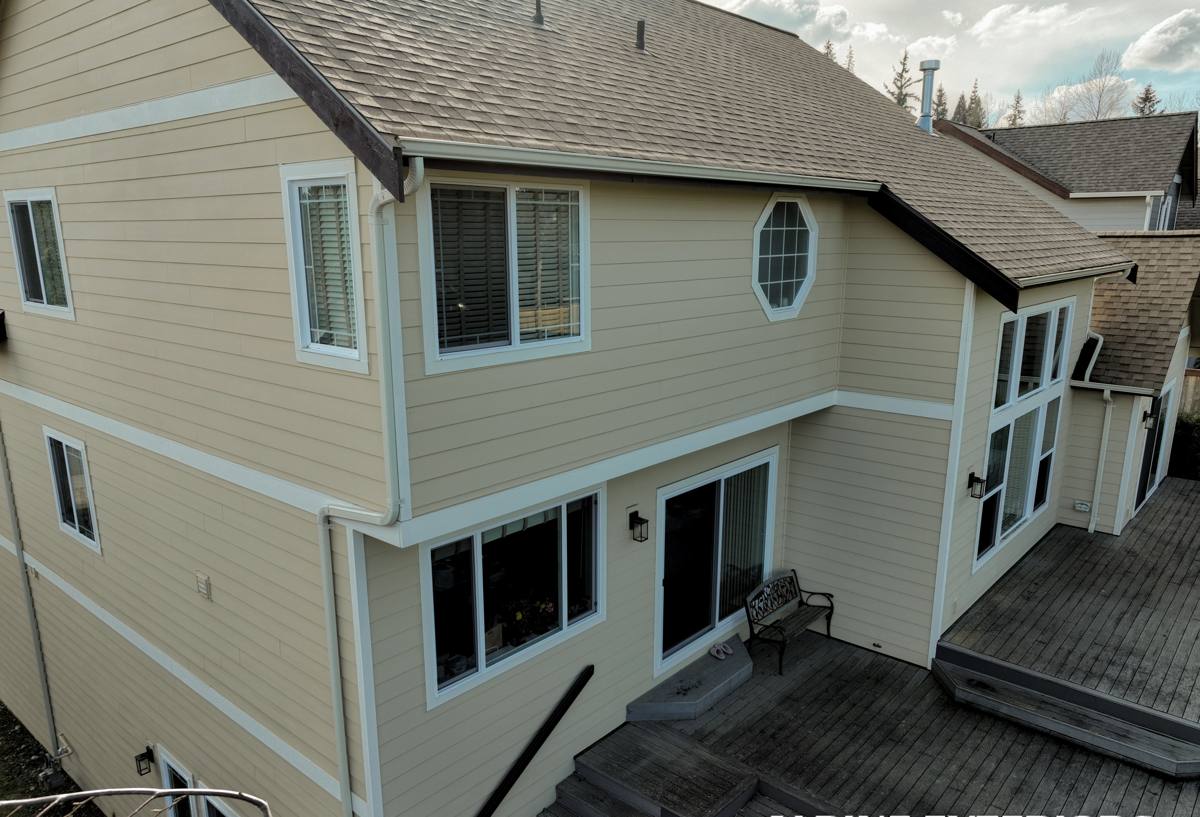
The Climate Factor: Bellingham's Marine Weather and Your Windows
Whatcom County's marine climate puts specific demands on windows that drier inland regions don't deal with. Salt-tinged air off Bellingham Bay accelerates corrosion on hardware, fasteners, and lower-grade frame components over time. Driving rain — the kind that comes in sideways during a winter storm — tests flashing and seals in ways that a light, straight-down rain never does. And the persistent dampness and shade common through much of the year support a moss and mildew season that can run most months, especially on north-facing walls and window trim.
All of that works against an aging window twice over. First, it degrades the seals and hardware faster than a mild, dry climate would, which shortens the useful life of the energy-efficient performance you're paying for. Second, it makes the installation itself less forgiving — a flashing detail that would get away with being "good enough" somewhere drier will get tested here, often within the first winter.
Where the Damage Actually Shows Up
On older Columbia homes, the first signs of trouble are usually condensation between panes on a failed dual-pane unit, soft or discolored trim around a window where water has been getting behind the casing, and drafts that show up as a cold spot near the window even when the glass itself looks fine. None of these are dramatic failures — they're slow, and they tend to get blamed on "old windows" in general rather than traced back to a specific seal or flashing failure. That's usually exactly what they are.
What "Energy-Efficient" Actually Means for a Whatcom County Home
"Energy-efficient" isn't one setting — it's a combination of ratings that need to match your home's actual exposure. The two numbers that matter most are U-factor, which measures how much heat the window lets through (lower is better for our climate), and Solar Heat Gain Coefficient (SHGC), which measures how much solar heat comes through the glass. In a climate like Bellingham's, where keeping heat in matters more than blocking summer sun, we generally prioritize a low U-factor over an aggressively low SHGC, though window orientation on your specific home can shift that recommendation.
Low-E (low-emissivity) coatings and inert gas fills — typically argon — between panes are what actually deliver most of the efficiency gain on a modern window. Neither is visible from the outside, which is part of why it's worth asking a contractor directly what's specified rather than assuming "new window" automatically means "efficient window."
| Glass Option | What It Does | Best Fit For |
|---|---|---|
| Standard dual-pane, Low-E coated | Solid baseline efficiency; blocks a meaningful share of heat loss versus single-pane or uncoated glass | Most Columbia replacement projects on a standard budget |
| Dual-pane, argon-filled, Low-E | Adds gas fill between panes for a lower U-factor than air-filled dual-pane | Homes prioritizing winter heat retention without the cost jump to triple-pane |
| Triple-pane | Lowest U-factor available, plus better sound dampening from street or neighborhood noise | North- or west-facing rooms, homes with high heating bills, or noise-sensitive locations |
Triple-pane costs more upfront and the added weight can matter on some frame types, so it isn't automatically the right call for every room in every Columbia home — but it's worth pricing out honestly rather than dismissing on cost alone, especially for rooms that take the brunt of our winter weather.
Frame Material Options for This Climate
Frame material matters as much as the glass package here, because the frame is what takes the direct hit from salt air and sustained moisture year after year. We'll walk through the honest trade-offs for your specific home rather than defaulting to whatever installs fastest.
- Vinyl — Low maintenance, good insulating properties, and reasonably priced. Doesn't corrode from salt air. The main trade-off is limited color and finish options compared to other materials.
- Fiberglass — Very stable across temperature swings, doesn't expand and contract as much as vinyl, and holds paint well if you want a custom color. Costs more than vinyl but tends to outlast it.
- Wood, clad or unclad — Best interior appearance for older or historic-style Columbia homes, but unclad wood requires ongoing maintenance to keep moisture out in this climate. Clad wood (vinyl or aluminum exterior over a wood core) gets you the interior look with less upkeep, at a higher price point.
- Aluminum — We generally steer away from bare aluminum frames on replacement work here; the thermal conductivity works against efficiency goals, and older aluminum units are exactly what tends to show corrosion and seal failure first in a salt-air, high-moisture climate. Thermally broken aluminum exists and performs better, but it's a niche option we'd only recommend for a specific architectural reason.
What a Correct Installation Involves
Measuring and Assessment
We start with a field measurement of the actual opening, not a guess based on the window that's currently there. Older Columbia homes frequently have openings that have shifted slightly out of square over the decades, and that gets accounted for before ordering, not discovered mid-installation.
Removal and Opening Prep
Pulling an old window out of an older wall assembly is often where hidden problems surface — rotted framing, missing or degraded original flashing, or insulation that settled and left gaps decades ago. We check for this at removal and address it before the new unit goes in, since a new energy-efficient window installed over a compromised opening will underperform regardless of how good the glass package is.
Flashing and Weatherproofing
This is the step that matters most given Bellingham's driving rain and marine exposure. Flashing has to be sequenced so water sheds outward and downward at every layer, with no reliance on caulk alone to do the job long-term. This is also where a rushed installation is most likely to cut corners, because it takes real time and doesn't show up as a visible defect until water finds its way in — sometimes years later.
Sealing and Interior Finish
Proper insulation and air sealing around the frame, not just at the glass, is what closes the gap between a window's rated efficiency and what you actually feel in the room. We finish with interior trim work that matches the rest of the house, particularly important on older Columbia homes where original trim profiles are part of the character of the place.
Practical Checklist Before You Commit
- Ask for the specific U-factor and SHGC ratings being quoted, not just "energy-efficient" as a general claim
- Confirm whether argon fill and Low-E coating are included or optional upgrades
- Ask how the flashing will be sequenced for your specific wall assembly and exposure
- Get a plan in writing for what happens if rot or framing damage is found during removal
- Confirm what's covered under warranty — the window unit and the installation labor are usually separate
- Ask how trim and interior finish will be matched to the rest of your home
Our Process, Start to Finish
- On-site assessment — we measure the openings, check the condition of existing framing and flashing, and evaluate which glass and frame combination fits your home's exposure
- Honest recommendation — a specific glass package and frame material, explained against your budget and which rooms take the worst weather
- Ordering and scheduling — realistic lead times, since efficient window units are often built to order rather than pulled from stock
- Careful removal — old units come out with attention to what's underneath, so hidden framing or flashing issues get caught early
- Installation and flashing — new units are set, shimmed, and flashed to a sequence built for Bellingham's rain and marine exposure
- Sealing and finish — interior and exterior trim integrated cleanly, with insulation and air sealing completed around the full frame
What Actually Drives the Cost
We won't quote a number without seeing your windows in person, but the factors that move price on an energy-efficient window project are fairly consistent: how many openings are being replaced, glass package (standard dual-pane versus argon-filled versus triple-pane), frame material, whether any framing or flashing repair is needed once the old unit comes out, and window size or shape. A straightforward like-for-like swap in a sound opening costs less than a project where rot repair or reframing is also needed — which is common enough in Columbia's older housing stock that we build the possibility into our estimates rather than treating it as a surprise change order.
Why a Crew That Works Columbia Regularly Matters
Manufacturer installation guidance is written for average conditions in a moderate climate. Columbia's older homes and Bellingham's marine weather don't match that description particularly well — salt air, wind-driven rain, and a long damp season all put more stress on a window installation than a generic instruction sheet accounts for. A crew that has actually worked this neighborhood's housing stock knows what to expect when an old wood sash comes out, how much extra time a flashing detail needs on a home this exposed, and which shortcuts simply don't hold up here even if they'd pass elsewhere.
That local experience shows up in decisions that don't come up in a sales pitch — how much lap a flashing course needs given the direction rain typically drives on a given wall, whether an opening's framing needs correction before a new window goes in, and when interior trim needs extra attention to match an older home's original profiles. Those details decide whether an energy-efficient window is still performing — and still dry — in fifteen years, not just on installation day.
What to Ask Before Hiring for Window Work
- Ask how many windows they've installed specifically in Columbia or similar older Bellingham neighborhoods
- Confirm current Washington contractor licensing and insurance
- Ask what they typically find when they open up walls on homes of this age, and how they handle it
- Get a written scope of work, glass and frame specifications, and a realistic timeline before signing anything
- Ask how labor and the window units are each covered under warranty
If your Columbia home has drafty, foggy, or aging windows, it's worth having someone look at the actual openings before you start pricing units online. We offer free, no-pressure estimates for energy-efficient window projects in Columbia and the surrounding Bellingham area — use the form below to get a time on the schedule.