 Bellingham
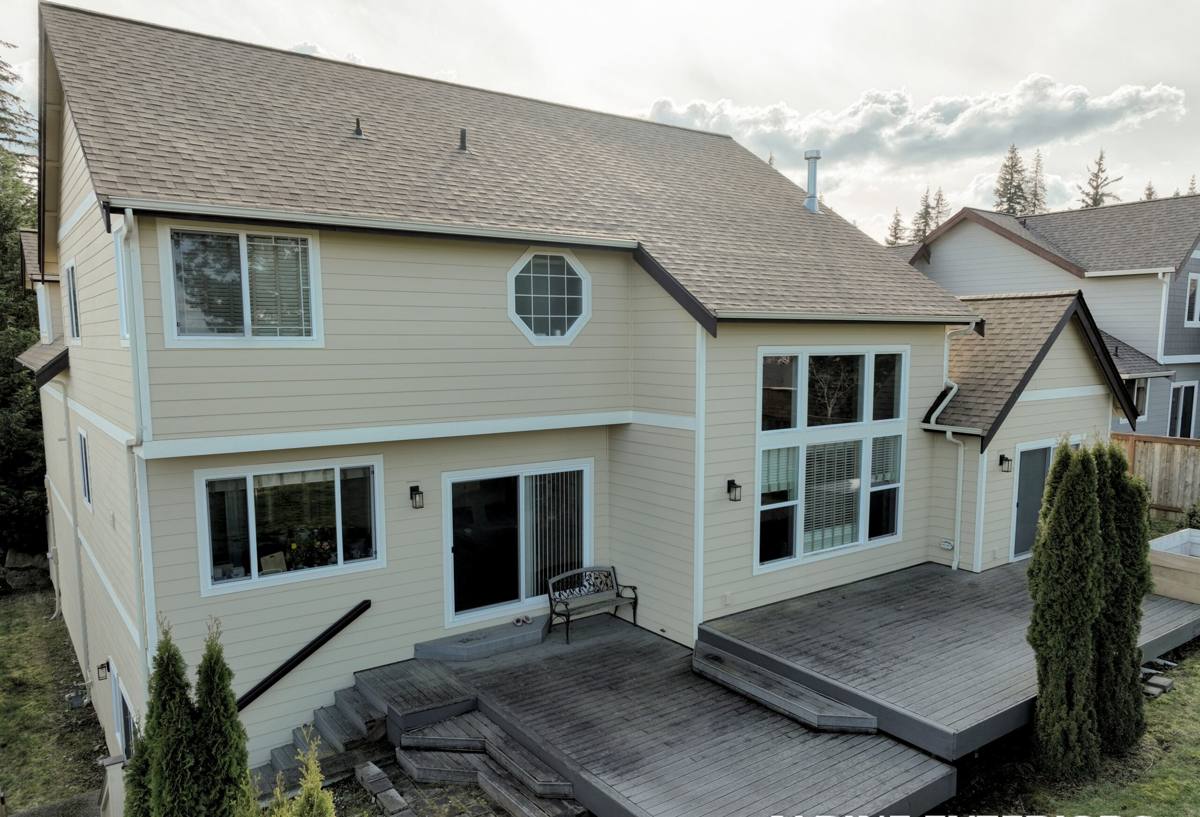
 Cordata sits in north Bellingham, close enough to the water and the lowland weather patterns that come with it that decks here take a beating most homeowners don't fully appreciate until they're standing on soft boards. Salt air off Bellingham Bay, driving rain that comes in sideways more often than straight down, and a moss season that can run eight months out of the year all work against wood, fasteners, and footings at the same time. A deck replacement done right in this neighborhood isn't just about new boards — it's about building something that can actually shed water and shrug off moss instead of hosting it.
Why Decks in Cordata Wear Out Faster Than Homeowners Expect
Most decks don't fail because the boards rotted through evenly. They fail because moisture got somewhere it shouldn't have and sat there. In Whatcom County's marine climate, that's a near-constant risk rather than an occasional one.
Moss and Standing Moisture
Moss doesn't just make a deck look neglected — it holds water against the wood surface and in the gaps between boards long after the rest of the yard has dried out. Over a few wet seasons, that trapped moisture works into fastener holes, board ends, and any spot where the original construction didn't leave room for drainage. By the time moss is visibly thick, the wood underneath has usually been damp for years.
Salt Air and Metal Fatigue
Being close to Bellingham Bay means a steady low-level exposure to salt in the air, which accelerates corrosion on fasteners, joist hangers, and any hardware that wasn't rated for it. A deck can look structurally fine on the surface while the nails or screws holding it together are quietly rusting from the inside of the wood outward. This is one of the more common reasons a deck that "looks okay" turns out to have real structural problems once we pull a few boards.
Signs a Deck Needs Full Replacement, Not Another Repair
Homeowners often ask whether a deck can just be patched again. Sometimes it can. Other times, patching is just delaying an inevitable and more expensive fix. Here's what tells us a deck has crossed that line:
- Soft or spongy spots in the decking, especially near the house or at board ends
- Rust staining bleeding out around nail or screw heads
- Visible gaps or movement where the ledger board meets the house
- Wobble in the railing posts, even if the railing itself looks intact
- Persistent moss or black staining that returns within weeks of cleaning
- Any sign of rot at the point where posts meet footings or concrete
- A deck older than 20-25 years that has never had the ledger flashing inspected
Any one of these on its own might be repairable. Two or three together usually mean the deck's problems are systemic, not isolated — and that's when replacement is the more honest recommendation, even if it's not the cheaper-sounding one up front.
What a Correct Deck Replacement Actually Involves
A deck replacement is really a structural project wearing a cosmetic hat. The parts nobody sees are what determine whether the new deck lasts 10 years or 30.
Ledger Board and Flashing
The ledger board — where the deck attaches to the house — is the single most common failure point in this climate, and it's also the one homeowners can't inspect themselves without removing decking. Correct flashing directs water away from the house band joist and down and away from the ledger, rather than trapping it against the wall. We treat this connection as the most important part of the entire job, not an afterthought.
Footings and Framing
Whatcom County's frost depth and soil conditions determine how deep footings need to go, and older decks in this area were sometimes built to standards that wouldn't pass inspection today. Replacement is the chance to correct undersized footings, add joists where spacing was too wide, and make sure beams are sized for the actual span and load rather than whatever lumber happened to be on hand originally.
Fasteners and Hardware
Given the salt exposure common to this area, we use fasteners and structural connectors rated for coastal or corrosive environments rather than standard hardware. It costs a little more upfront and saves years of hidden corrosion later.
Choosing a Decking Material for Cordata's Climate
There's no single right answer here — it depends on budget, how much upkeep you want to take on, and how long you plan to stay in the home. What matters is picking with the moss-and-moisture reality in mind rather than by looks alone.
| Material | Upfront Cost | Maintenance Needed | How It Handles Moss & Moisture |
|---|---|---|---|
| Pressure-treated wood | Lowest | Annual cleaning and re-staining/sealing | Prone to moss buildup and surface graying without regular upkeep |
| Cedar | Moderate | Regular sealing to hold natural rot resistance | Naturally more rot-resistant but still needs moss removal and drainage |
| Capped composite | Higher | Occasional washing, no staining | Resists moisture absorption well; still needs airflow underneath to discourage moss on the surface |
| PVC decking | Highest | Lowest of all options | Doesn't absorb water, so it holds up best against sustained damp and moss compared to wood-based products |
Wood costs less to install but asks more of you every year. Composite and PVC cost more upfront but shift the maintenance burden away from constant sealing and staining — a trade-off worth thinking through honestly rather than just chasing the lowest bid.
Permits and Code Requirements in Bellingham and Whatcom County
Most full deck replacements require a permit, particularly when the deck is attached to the house or elevated more than a couple feet off grade. Depending on the scope, this typically covers footing depth and placement, ledger attachment method, guardrail height where the deck is elevated, and stair rise-and-run if steps are part of the project. Skipping the permit might save time in the short term, but it becomes a real problem at resale or if an inspector ever asks to see it. We handle the permit process as a standard part of the job rather than something the homeowner has to chase down separately.
Our Process for a Cordata Deck Replacement
- On-site assessment — we look at the existing structure, ledger connection, and footings before quoting anything, since what's underneath often changes the scope
- Honest scope and estimate — a clear breakdown of what's being replaced and why, with material options explained rather than pushed
- Permit filing — handled on your behalf where required, based on the deck's size and attachment
- Demolition and disposal — old decking, framing, and hardware removed and hauled off
- Structural rebuild — new footings or repaired footings as needed, correctly flashed ledger, properly sized framing
- Decking and railing installation — installed to manufacturer spacing and fastening specs, not shortcuts
- Final walkthrough — we go over the finished deck with you before calling the job done
Caring for a New Deck Through the Wet Season
A well-built deck still needs some seasonal attention in this climate. A little bit of regular care goes a long way toward avoiding the moss and moisture problems that shortened the life of the last one.
- Sweep leaves and debris off the deck surface before fall rains set in
- Keep gutters clear so runoff isn't draining directly onto or near the deck
- Rinse off moss growth early in the season before it gets a foothold
- Check that gaps between boards stay clear of packed debris that traps water
- Inspect railings and stair connections once a year for any looseness
- For wood decks, plan on resealing or restaining on the schedule the product calls for — don't stretch it
Why Hiring a Crew That Already Works in Cordata Matters
A deck replacement isn't a product you buy off a shelf — it's a structure built to handle a very specific set of local conditions. A crew that regularly works Cordata and the rest of Bellingham already knows how the local frost depth affects footing requirements, how Whatcom County permitting works in practice, and which corners tend to get cut on older decks in this area because they don't hold up long-term. That familiarity shows up in fewer surprises during the project and a deck that's actually built for the weather it has to survive, not a generic build dropped into a Pacific Northwest lot.
If your deck is showing its age or you're just tired of fighting moss every spring, we're happy to take a look and give you a straightforward, no-pressure estimate — use the form below to get started.