 Bellingham
 Building Decks for Sehome's Hillside, Tree-Covered Lots
Sehome sits in the heart of Bellingham, and it's a neighborhood of contrasts: older homes on sloped lots mixed in with newer construction, mature tree canopy overhanging backyards, and a mix of flat and steeply graded parcels within a few blocks of each other. A deck that works well on a flat, sun-exposed lot in one part of town can be the wrong design entirely a few streets over in Sehome, where shade, slope, and drainage patterns are different. Building decks here means treating each lot on its own terms rather than repeating a standard layout.
That local variation is exactly why a generic deck plan often underperforms in this neighborhood. Grading, tree cover, and how close a lot sits to Bellingham Bay all change what a deck needs to hold up long-term — and all three show up differently from one Sehome yard to the next.
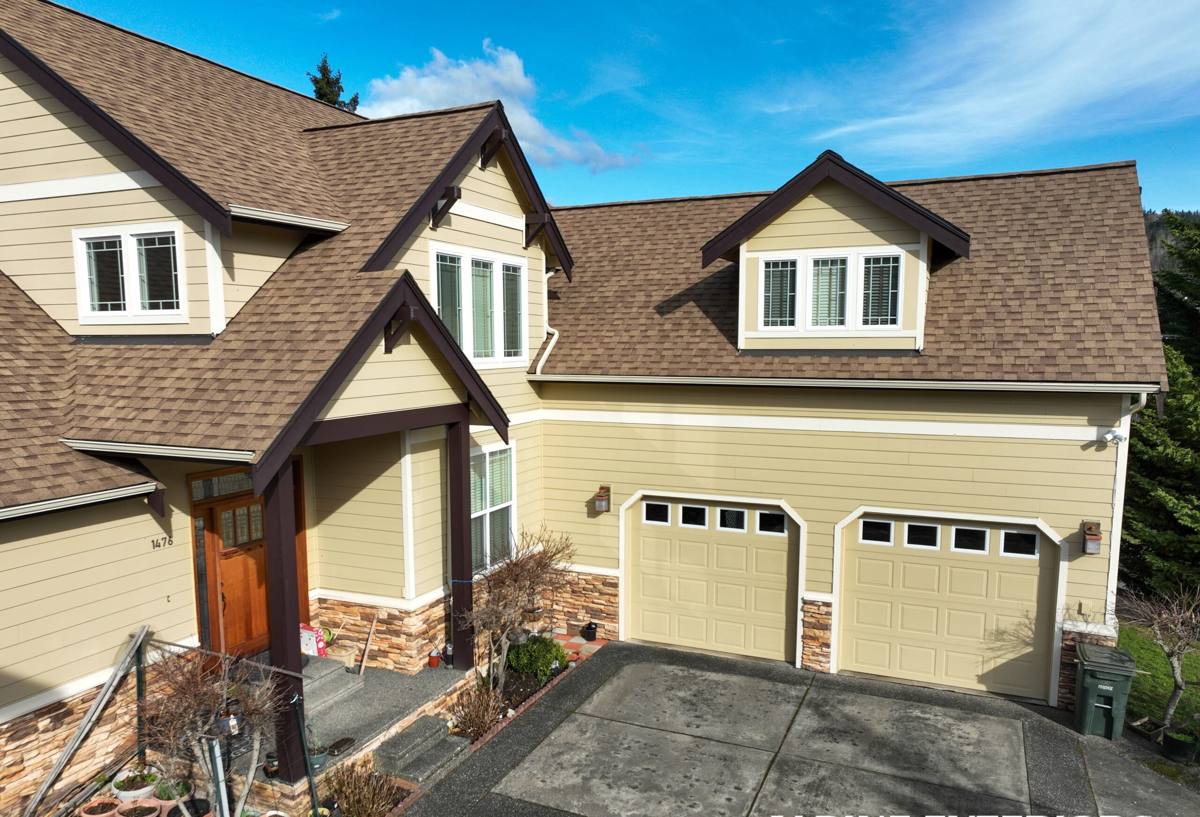
What Bellingham's Marine Climate Does to an Outdoor Deck
Whatcom County's weather is mild compared to a lot of the country, but "mild" doesn't mean easy on wood, metal, or fasteners. Three things do most of the damage to decks here, and they compound each other over a few seasons if a deck isn't built to account for them.
Salt Air and Corrosion
Bellingham Bay is close enough that salt-laden air reaches inland neighborhoods, including Sehome, especially on windy days. Salt air accelerates corrosion in fasteners, hardware, and any metal railing components. A deck built with the wrong grade of screws or brackets can show rust streaks and weakened connections well before the wood itself shows its age.
Driving Rain and Wind-Driven Moisture
Rain here doesn't just fall straight down. Storms off the Salish Sea regularly push rain sideways, which means water gets driven into places a fair-weather design never accounts for — under railings, behind ledger boards, into end-grain cuts that weren't sealed. Over time, that's how rot starts, not from a single storm but from repeated wind-driven soaking that never fully dries between events.
Moss, Algae, and the Long Wet Season
Bellingham's moss season runs long — realistically fall through spring — and shaded, tree-covered lots like many in Sehome make it worse. Moss and algae hold moisture against the deck surface, make boards slick, and, on the wrong material, can work into the wood grain itself. A deck surface that can't shed water and dry out between rains will fight a losing battle against moss no matter how often it's cleaned.
Picking a Decking Material That Holds Up Here
There's no single "best" decking material — there's a best material for this climate, this lot, and this budget. Here's how the common options actually perform under Bellingham conditions, not just in a showroom.
| Material | Moisture & Moss Behavior | Maintenance | Typical Lifespan Here |
|---|---|---|---|
| Pressure-treated wood | Absorbs water; needs a sealed surface to resist moss and staining | Annual cleaning, periodic re-staining/sealing | 10–15 years with upkeep |
| Cedar | Naturally rot-resistant but still absorbs moisture; grays and can host moss if shaded | Regular cleaning and refinishing to keep its look and resistance | 15–20 years with upkeep |
| Capped composite | Sheds water well, resists moss buildup better than wood, but grooved boards can trap grit and organic debris | Periodic washing; no staining or sealing needed | 25+ years |
| Cellular PVC | Doesn't absorb moisture at all; best resistance to moss and rot | Occasional washing | 25+ years |
For heavily shaded Sehome lots specifically, moisture retention matters more than it might in a sunnier part of the county — a board that can't dry out between rain events is the one that grows moss fastest, regardless of brand.
What's Underneath Matters as Much as the Surface
Homeowners naturally focus on the decking boards, but the framing and connections underneath are what actually determine whether a deck lasts. This is where a correctly built deck and a deck that looks fine for a few years but fails early really diverge.
- Footings sized for the soil and slope — many Sehome lots have grade changes that affect how footings need to be set and how deep they need to go for stability.
- Ledger flashing done properly — the ledger board connection to the house is the single most common point of hidden rot on any deck; it needs correct flashing and a water-shedding detail, not just fasteners and caulk.
- Joist protection — capping or taping the tops of joists keeps water from sitting in fastener holes and starting rot from the inside out, which is invisible until the deck surface starts to feel soft.
- Corrosion-resistant fasteners and hardware — given the salt air here, stainless or high-grade coated fasteners and structural connectors are worth the upgrade over standard hardware.
- Airflow underneath — a deck built low to the ground or boxed in without ventilation traps moisture and speeds up both rot and moss growth on the underside of the boards.
Design Choices That Fit Sehome's Homes and Lots
Beyond material and framing, the design itself should respond to the specific conditions of a Sehome property.
Working With Slope
On graded lots, a multi-level deck or a design with a stepped transition to the yard often makes more sense than forcing a single flat plane, and it can reduce how much cutting and filling the site needs.
Railings and Code
Guardrail height and baluster spacing are governed by building code, and railing hardware should match the same corrosion resistance standard as the rest of the deck's fasteners — a good-looking railing that starts rusting at the connections within a couple of winters isn't a good value regardless of upfront cost.
Living With Tree Cover
Mature trees are one of the things that make Sehome attractive, but they also mean planning for leaf and needle debris in gaps between boards, shade patterns that keep sections of the deck perpetually damp, and root systems that can affect footing placement. A good design accounts for these rather than fighting them after the fact.
Drainage Around the Deck
Grading and drainage at ground level matter as much as the deck structure itself — a deck built correctly but sitting over ground that doesn't drain will still stay damp underneath through the wet months.
Our Process From First Call to Finished Deck
Every project follows the same sequence, adjusted for the specifics of the property:
- On-site visit to assess slope, drainage, sun/shade exposure, tree cover, and existing structure (if replacing a deck).
- Design conversation covering layout, material options, and railing style based on how the space will actually be used.
- A written estimate that lays out material choice, scope, and cost factors in plain language.
- Permit handling with the city or county, sized correctly for the project.
- Demolition of the old structure, if applicable, and site prep including footing layout.
- Framing with corrosion-resistant hardware and proper ledger flashing and joist protection.
- Decking, railing, and any stairs, with attention to fastener pattern and drainage gaps.
- Final walkthrough covering how to maintain the specific material installed through moss season.
Keeping a Deck Ahead of Moss Season
A well-built deck still needs some ongoing attention, especially in a neighborhood with heavy tree cover. This isn't a demanding routine, but skipping it is how moss and staining get ahead of a homeowner.
- Sweep leaves and needles out of board gaps before they compost in place and hold moisture.
- Rinse or wash the surface a couple of times a year, more often on shaded sections.
- Check and clean any drainage gaps or gutters that direct water away from the structure.
- Re-seal or re-stain wood decking on the schedule the finish product recommends — don't wait until it's visibly gray and weathered.
- Look underneath once a year for softness, staining, or standing water, which are early signs worth addressing before they spread.
Permits, Codes, and Doing It Right the First Time
Most custom deck projects in Bellingham require a building permit, and the review process checks things like footing depth, guardrail height, and structural connections to the house. Skipping permitting on a deck of meaningful size isn't just a compliance issue — it can complicate a home sale later and, more importantly, means no third-party check on the structural details that actually keep people safe. A contractor who builds decks here regularly knows what the local permitting process expects and builds to that standard from the start, rather than treating it as an afterthought.
Why It Matters to Hire a Crew That Already Works in Sehome
A lot of what separates a deck that holds up in this climate from one that doesn't isn't visible on installation day — it's in the footing depth, the flashing detail behind the ledger, the fastener grade, and the drainage plan around the structure. Those are the choices that show their consequences three, five, or ten winters later, and they're also the choices that are hardest and most expensive to correct after the fact. A crew that regularly builds in Sehome and similar Bellingham neighborhoods has already seen how salt air, driving rain, and long moss seasons affect decks over time, and builds accordingly rather than learning that lesson on your project.
If you're planning a new deck or replacing one that's showing its age, we're happy to take a look at your property and talk through what makes sense for your lot, your budget, and Whatcom County's weather. Reach out for a free, no-pressure estimate using the form below.